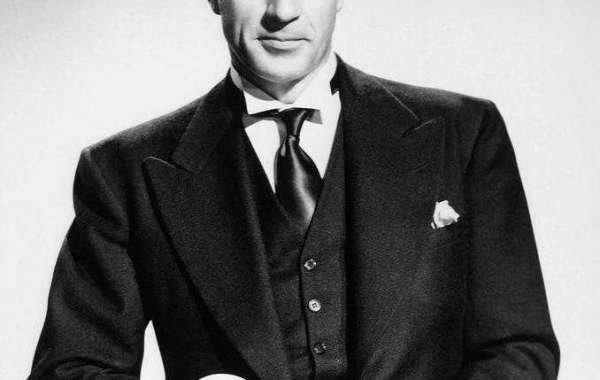
One of the greatest male stars of classic Hollywood cinema, Gary Coopercelebrity heightswho was one of the top 10 film personalities for 23 consecutive years, and one of the top money-making stars for 18 years. He is known for his natural, authentic, and understated acting style. He won the Academy Award for Best Actor twice and had a further three nominations, as well as receiving an Academy Honorary Award for his career achievements in 1961.
Cooper's career spanned 36 years, from 1925 to 1961, and included leading roles in 84 feature films. He was a major movie star from the end of the silent film era through to the end of the golden age of Classical Hollywood. His screen persona appealed strongly to both men and women, and his range of performances included roles in most major film genres. His ability to project his own personality onto the characters he played contributed to his natural and authentic appearance on screen. Throughout his career, he sustained a screen persona that represented the ideal American hero.
Cooper began his career as a film extra and stunt rider, but soon landed acting roles. After establishing himself as a Western hero in his early silent films, he appeared as the Virginian and became a movie star in 1929 with his first sound picture, The Virginian. In the early 1930s, he expanded his heroic image to include more cautious characters in adventure films and dramas such as A Farewell to Arms (1932) and The Lives of a Bengal Lancer (1935). During the height of his career, Cooper portrayed a new type of heroa champion of the common manin films such as Mr. Deeds Goes to Town (1936), Meet John Doe (1941), Sergeant York (1941), The Pride of the Yankees (1942), and For Whom the Bell Tolls (1943). He later portrayed more mature characters at odds with the world in films such as The Fountainhead (1949) and High Noon (1952). In his final films, he played non-violent characters searching for redemption in films such as Friendly Persuasion (1956) and Man of the West (1958).
Cooper's acting style consisted of three essential characteristics: his ability to project elements of his own personality onto the characters he portrayed, to appear natural and authentic in his roles, and to underplay and deliver restrained performances calibrated for the camera and the screen. His ability to project his personality onto his characters played an important part in his appearing natural and authentic on screen. Gary Cooper's style of underplaying before the camera surprised many of his directors and fellow actors. Even in his earliest feature films, he recognized the camera's ability to pick up slight gestures and facial movements.
Cooper's career spanned thirty-six years, from 1925 to 1961. During that time, he appeared in eighty-four feature films in a leading role. He was a major movie star from the end of the silent film era to the end of the golden age of Classical Hollywood. His natural and authentic acting style appealed powerfully to both men and women, and his range of performances included roles in most major movie genres, including Westerns, war films, adventure films, drama films, crime films, romance films, comedy films, and romantic comedy films. He appeared on the Motion Picture Herald exhibitor's poll of top ten film personalities for twenty-three consecutive years, from 1936 to 1958. According to Quigley's annual poll, Cooper was one of the top money-making stars for eighteen years, appearing in the top ten in 193637, 194149, and 195157. He topped the list in 1953. In Quigley's list of all-time money-making stars, Cooper is listed fourth, after John Wayne, Clint Eastwood, and Tom Cruise.
Gary Cooper
Posted 5 years ago in Places and Regions.
361 Views
One of the greatest male stars of classic Hollywood cinema

Josephine Hills
Living in
United Kingdom